
Metal Fabrication & Engineering
Good fabrication deserves
a better finish.
Weld cleaning, surface preparation and permanent part identification for fabrication shops and engineering teams. Match the process to the material, the job and the pace of production.

01 TIG & MIG weld finishing
02 Rust, paint & surface preparation
03 Permanent part identification
The challenge
The finish is part
of the job.
A useful finishing process fits the part, the surface and the way your team works.
01 / THE WELD
Different welds, different deposits
Separate heat tint from spatter, silicon deposits and weld defects. Plan any preparation before deciding which cleaning machine suits the job.
02 / THE FINISH
Avoid unnecessary rework
Retain the required appearance on stainless parts and choose an appropriate preparation process for coated or corroded steel. Do not treat every surface the same way.
03 / THE WORKLOAD
Keep the complete job moving
Include loading, access, cleanup and part identification when comparing systems. A quick pass on an easy weld is only part of the production cycle.
Real application evidence
See the welds.
See the treatment.
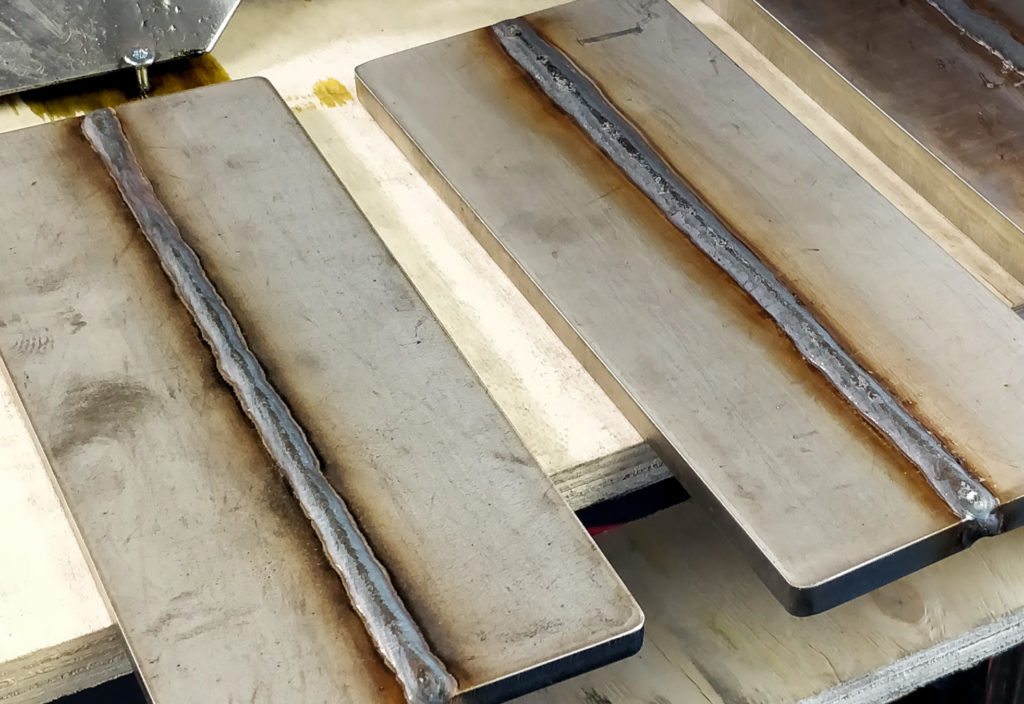
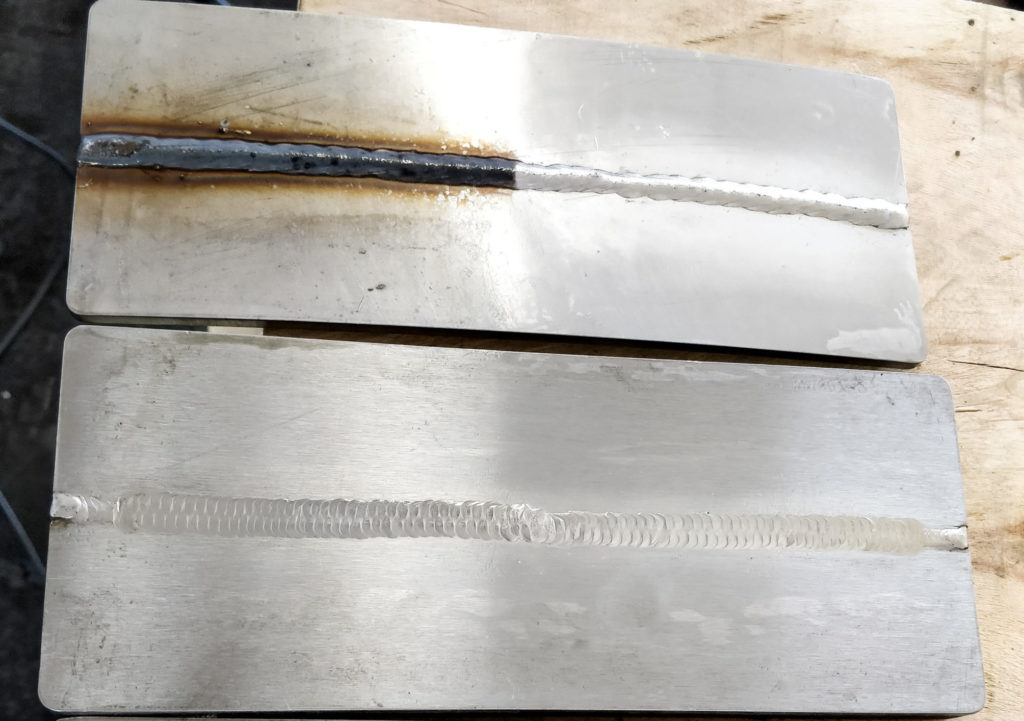
Examples from Cougartron’s published stainless MIG weld-cleaning demonstration.
Typical fabrication applications
Built around the parts
you need to finish.
Choose the treatment around the weld, the access and the finished surface—not just the machine rating.
STAINLESS
TIG & MIG fabrications
Clean suitable weld oxides on brackets, tanks, enclosures and fabricated structures. Try the normal range of weld conditions and the required final finish.

ASSEMBLIES
Pipework & site work
Reach seams around fittings and assembled parts. Compare brush access, portability and fluid supply before choosing the working setup.

SURFACE PREPARATION
Rust & paint removal
Evaluate laser cleaning on actual coated or corroded parts. Match pulsed or continuous-wave equipment to the substrate, coating and treatment area.

TRACEABILITY
Parts, tools & nameplates
Apply readable logos, serial numbers or part IDs. Compare laser, dot peen and electrochemical marking on the material and mark location.
A practical workflow
Trial the complete job.
Then choose the system.
01
Identify what needs removing
Record the material, welding process or coating, deposits and required finish. Separate weld cleaning from spatter removal or correction of a weld defect.
02
Test the difficult section
Include dark oxide, starts and stops, corners and restricted access. For laser work, compare the coating removal and resulting substrate on a representative sample.
03
Time through to the finished part
Include preparation, handling, cleaning, residue removal and inspection. Add the marking step if part identification is part of the order.
Equipment to evaluate
Match the machine
to the work.
Use a representative sample to compare the finish, complete cycle and working setup.

REGULAR STAINLESS WORK
ProPlus
A portable starting point for regular stainless TIG and suitable MIG cleaning. Useful when the shop needs more capacity while retaining a movable setup.

DAILY TIG & MIG CLEANING
FURY100
Compare FURY100 for demanding stainless work, darker MIG welds and heavier cleaning workloads. Match brushes and fluid supply to the job.

SELECTIVE SURFACE CLEANING
200P Laser Cleaner
Pulsed laser cleaning for a trial on rust, paint or surface contamination where selective treatment and portability matter. Check the result on the actual base material.
Start with the weld and workload.
Tell us the material, deposits and daily volume. Check the electrical supply and equipment variant for your location.
Practical process decisions
Choose the process
around the work.
Weld oxide, old paint and an unreadable part ID are different problems. Give each one the appropriate tool rather than stretching a single process across every task.
A published fabrication example
Cougartron’s 2020 VM Tarm case study describes ProPlus use in stainless tanker fabrication. It is a genuine example of equipment in a production setting, with the original application account available to read.
Heavier laser-cleaning workloads
For larger steel surfaces and heavier coating removal, compare the 2000CW continuous-wave system with the pulsed 200P. Include substrate condition, coating, treatment area, electrical supply, controlled laser work area and extraction in the demonstration brief. See laser cleaning applications.
Permanent marking
Consider MK310 laser marking, DotTrax P100 dot peen or MK612 electrochemical marking. Compare readable marks on your own components using the marking and traceability guide.
Fluid, brush and cleanup
Choose compatible brushes and fluids for electrochemical cleaning. Include final residue removal in the work instruction. Our practical process guide explains the cleaning sequence.
Practical questions
Bring the right questions
to the demonstration.
Will a weld cleaner remove spatter or every dark deposit?
Cleaning weld oxide and removing hard deposits are different tasks. Some spatter and silicon deposits need preparation first. Bring a photograph or sample so the trial reflects the actual surface.
Which machine should a mixed fabrication shop start with?
Start with the material, TIG/MIG workload, oxide condition and required finish. Use the weld-cleaner selector to shortlist equipment, then time a complete job on the representative part.
Should we choose laser cleaning or electrochemical weld cleaning?
Use the surface problem to make the first choice: stainless weld oxide, corrosion or an old coating may call for different treatment. Compare a sample through the applications guide and agree a demonstration rather than choosing by headline power alone.
Put your application to the test
Bring the awkward weld.
The rusty part. The marking job.
Send a photograph or arrange a sample demonstration. We’ll help compare Cougartron equipment against the finish, access and output your workshop needs.
What to include
The job
Stainless welds, rust, coatings or permanent marking
The requirement
Material, surface finish, mark or coating to remove
The workload
Part size, access, daily volume and available supply