

Stainless steel passivation after welding: what your welds need
A stainless steel weld can look finished before the surface is ready for service. Heat tint and fabrication contamination deserve attention, especially on pipework, tanks and equipment exposed to water, cleaning chemicals or process fluids.
Post-weld cleaning and passivation are closely connected, but they are not interchangeable terms. Understanding the difference helps you choose a sensible finishing process and deliver the surface your customer needs.
Why welding changes the surface
Stainless steel’s corrosion resistance depends on its alloy and a thin passive surface film. Welding can create a thicker coloured oxide around the seam. Chromium used in forming that oxide can leave a chromium-depleted area beneath it. Fabrication can also introduce contamination, including iron from unsuitable tools or handling.
That is why the coloured zone around a weld is more than a finishing detail. The stainless grade, condition of the surface and service environment all influence what treatment is appropriate. The British Stainless Steel Association’s post-weld finishing guide explains the underlying surface changes.
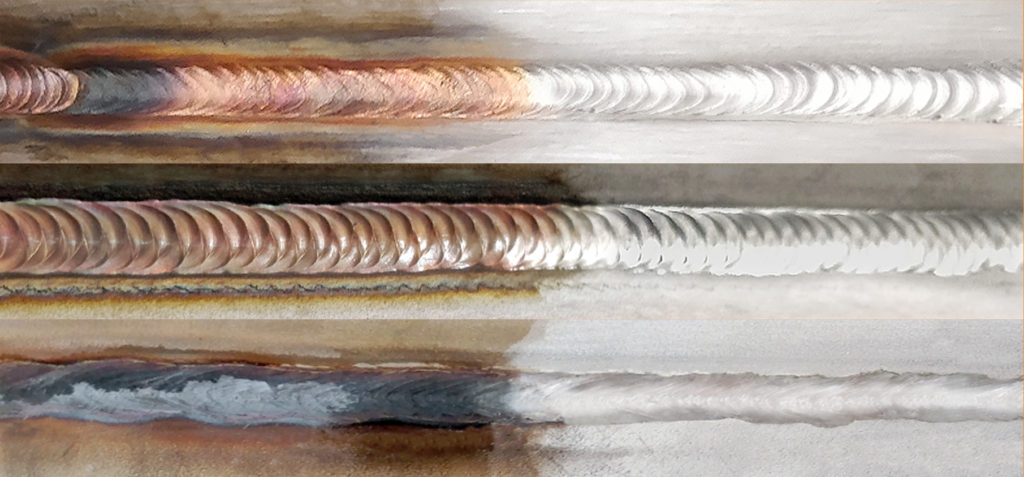
Cleaning removes the problem; passivation concerns the final surface
Cleaning removes unwanted material. That might mean oil, weld oxide or other contamination, so the method needs to suit what is actually on the part.
Passivation concerns the passive condition of the stainless surface. On a customer’s drawing or purchase order, it may also mean a specified treatment and verification procedure. A bright finish alone does not confirm that requirement has been met.
Settle the required finish and any named procedure before work begins. It is much easier to plan treatment while the welds are accessible than to revisit the inside of a completed assembly.
Choose the treatment around the part
| Method | What to consider in the workshop |
|---|---|
| Mechanical finishing | Suitable abrasives and dedicated stainless tools; the amount of oxide removed; the effect on the surrounding finish. |
| Chemical pickling | The formulation, alloy, contact time and access for applying and removing the product. |
| Electrochemical weld cleaning | A compatible machine, fluid and brush; access to the seam; removal of residues after treatment. |
A finishing sequence may combine methods. For example, a weld may need spatter removal or mechanical dressing before surface cleaning. The useful comparison is the finished part and the complete workload, rather than one step in isolation. See the weld-cleaning methods comparison.
Where Cougartron fits into the process
Cougartron electrochemical systems treat suitable weld oxides locally with a powered brush and compatible fluid. This makes them useful to consider on stainless frames, tanks, brackets and pipe assemblies where the seam needs cleaning and the surrounding finish matters.
For smaller TIG jobs, start by looking at Power30. For regular TIG and suitable MIG cleaning, consider ProPlus. For heavier daily work, compare FURY100. A trial on your own welds is the best way to match the equipment to access, finish and workload.
The electrochemical weld-cleaning guide explains the setup and cleaning sequence. Bring any specified passivation procedure into the equipment discussion so the trial includes the right finishing and inspection steps.
Look beyond the easy-to-see weld face
Check the weld, the nearby heat tint and any areas affected by handling or fabrication contamination. Internal pipe faces and the inside of vessels can be just as important as the visible external seam.
The treatment area depends on the assembly and its requirements. It may be local, or a wider surface may need attention. Surface cleaning does not repair a weld defect or reverse unsuitable weld metallurgy, so deal with those issues separately.
Finish with a clean, dry surface
Follow the selected fluid’s instructions for wiping, rinsing and neutralization where required. Pay attention to corners, joints and places where liquid collects. Inspect the dry surface for marks, residues and remaining contamination; the neutralization guide covers that part of the workflow.
If the job specifies a passivation treatment or acceptance test, complete that requirement before releasing the part. The ASTM and weld-cleaning resource provides further context. The 2018 corrosion comparison describes a separate historical test; it does not replace checks required for your component.
Make the demonstration relevant to your industry
On food and pharmaceutical equipment, discuss product-contact surfaces, internal access and final cleanup with the equipment owner. Our Food & Beverage Manufacturing guidance shows where weld cleaning fits into fabrication.
For a useful demonstration, tell us the stainless grade, welding process, final finish and expected service conditions. Include any treatment requirement from your customer. We can then focus the trial on the work you need to deliver.